
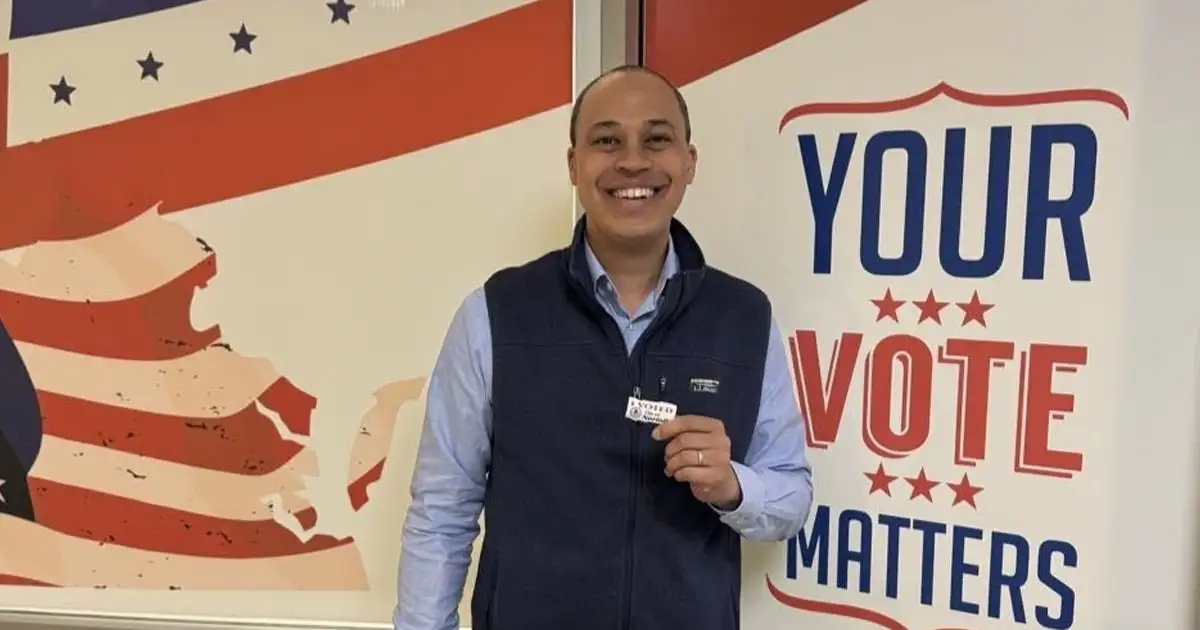
On Monday, Attorney General Jay Jones signed Virginia onto another multistate lawsuit against the Trump administration — this one over HUD money for homelessness programs — and issued a statement explaining why it mattered. “Access to safe and affordable housing is the foundation of any successful family,“ he wrote, “because where you live impacts your health, education, employment, and access to opportunity.“
Hold that sentence. We’ll come back to what Jay Jones thinks about other people’s families.
On August 8, 2022, Jones texted Republican Delegate Carrie Coyner about Todd Gilbert, then Speaker of the House of Delegates. He called him “that POS.“ He wondered aloud what Gilbert “would say about me if I died.“ Then, as *National Review* first reported, it turned: “If those guys die before me, I will go to their funerals to p*** on their graves“ — so as to “send them out awash in something.“
Then he set up a hypothetical. Three people, two bullets: Gilbert, Hitler, and Pol Pot. Virginia’s future chief law enforcement officer didn’t hesitate. Gilbert “receives both bullets every time.“
Coyner asked him to stop. Jones called her to explain himself, and this is the part that should stop you cold. Public policy, he told her, only changes when policymakers feel pain themselves — the kind of pain parents feel when their children die from gun violence.
She hung up. He kept texting. He was just asking questions.
“I mean do I think Todd and Jennifer are evil? And that they’re breeding little fascists? Yes.“
Coyner’s own words, in that thread, were that Jones was “hopping [sic] Jennifer Gilbert’s children would die.“
That wasn’t a hot-headed text. That was a theory — that the right amount of suffering, applied to the right family, produces the right vote. And the man who held it now writes press releases about the foundation of a successful family.
He apologized. He said he was “embarrassed, ashamed, and sorry.“ He called Gilbert to apologize to him, to Jennifer, and to the children he’d described as fascists in the making. Then he beat incumbent Jason Miyares by nearly seven points — 53.1% to 46.5% — and was sworn in on January 17, 2026.
Here’s what he did with the office.
His very first act — day one — was to announce he would join litigation against the Trump administration and open what his own office called a “comprehensive 30-day review of all existing litigation.“ Not a review of violent crime in Virginia. Not a review of the fentanyl moving through Fairfax. A review of lawsuits against Washington, to decide which ones to join and which to drop.
Since then: the election executive order. USDA funding. Tariffs. And now HUD. He publishes a weekly roundup of it — a recurring newsletter, in his own words, cataloguing what he did to Trump this week.
Now look closely at the homelessness suit, because it tells you everything.
It is a fight over paperwork. The coalition argues HUD violated the Administrative Procedure Act by skipping notice-and-comment rulemaking when it created a $1.3 billion set-aside steering money toward transitional housing. It was filed in the U.S. District Court for the District of Rhode Island — 500 miles from Richmond — by a coalition of more than twenty jurisdictions. Jones’s own release describes him filing “along with a coalition of other attorneys general.“ Even the headline number isn’t his: the estimate that 97,000 residents could lose housing originates with the National Alliance to End Homelessness.
He wasn’t first, either. The states filed on July 7. Virginia’s name went on the paperwork nearly a week later.
And here is the fact that settles the argument. When this same coalition sued HUD over Continuum of Care funding in 2025, Virginia wasn’t on it. Jason Miyares kept Virginia out. The Commonwealth’s interests did not change between 2025 and 2026. The attorney general did.
That’s the whole story. Same program, same agency, same federal argument — and the only variable is which man holds the office and what he wants the office for.
Not one tent comes down in Fairfax. Not one rent check gets smaller. Jones’s name goes on a press release, the press release goes in the roundup, and the roundup goes to whoever is deciding the next Democrat primary.
Meanwhile the job he actually has sits there. The office of Attorney General exists to enforce Virginia’s law for Virginia’s people — the grandmother in Annandale scammed out of her savings, the family in Springfield living next to a house nobody will prosecute, the small business in Reston buried by a contract dispute it can’t afford to fight. Those cases don’t come with a coalition of twenty states. They don’t come with a national headline. They come with Virginians, one at a time, who need their attorney general to be a lawyer instead of an activist.
Jay Jones told us in 2022 what he believes: that the people on the other side aren’t opponents, they’re evil, and that pain is how you change their minds. He apologized for the words. He kept the worldview, and he found a respectable place to put it — a courthouse in Rhode Island, twenty-odd co-signers deep, where the enemy is always in Washington and never in Virginia.
Virginia’s next chance to correct this is November 2029.