
Originally published by Hot Air | By John Sexton | April 6, 2026
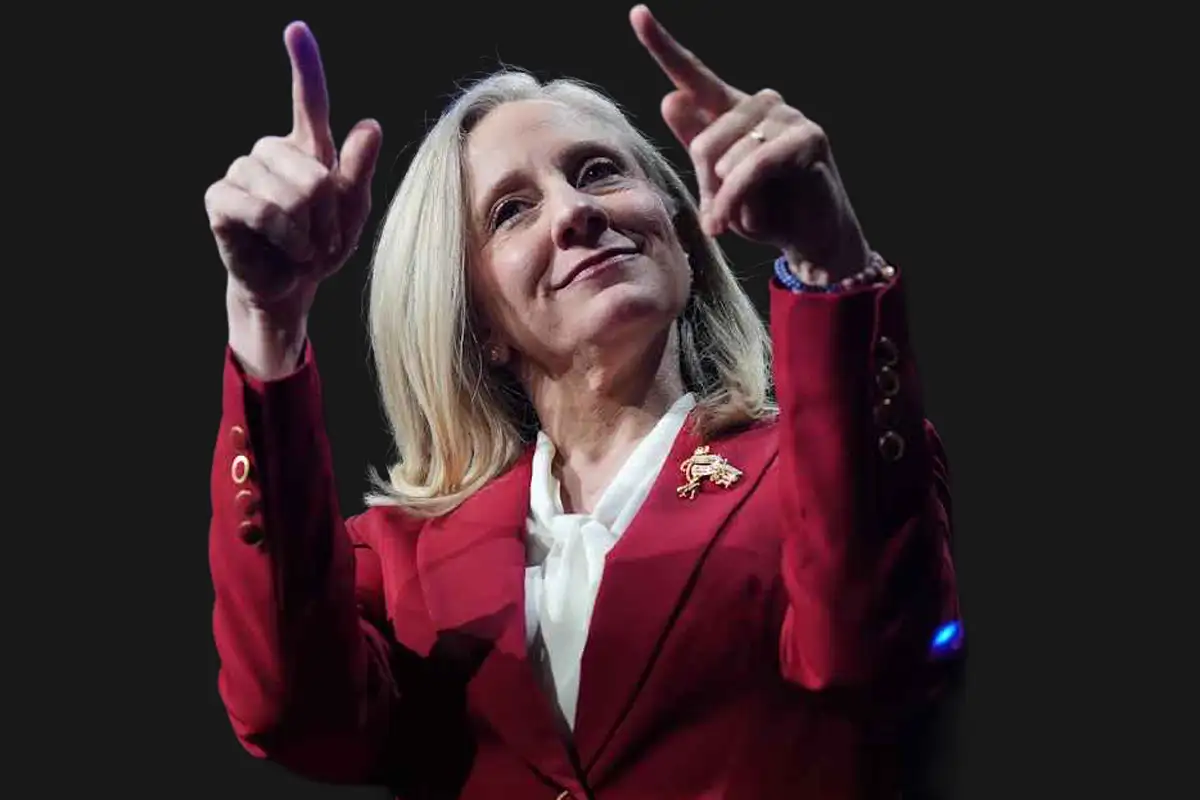
Just two months into her term as Virginia’s first female governor, Abigail Spanberger’s approval rating has plummeted to concerning levels. According to a Washington Post-Schar School poll, her approval stands at 47 percent, with 46 percent disapproving and 7 percent undecided.
This represents a sharp decline from her landslide 15-point victory last year, when she campaigned as a pragmatic moderate and built her reputation on bipartisanship during three congressional terms representing a conservative-leaning district.
The governor’s current approval rating is 13 percentage points lower than the historical average for Virginia governors in Post polling since the 1990s. Her near-even approval-disapproval split is worse than her immediate predecessor Glenn Youngkin’s early-term ratings, which showed 50 percent approval and 46 percent disapproval in a similar Post poll.
The polling reveals sharp polarization among Virginia voters. While nearly two-thirds of voters hold strong opinions — 29 percent strongly approve while 38 percent strongly disapprove — Spanberger’s shift away from moderate positioning has alienated key voter groups.
Among independents, 44 percent believe her positions are too liberal. In contrast, only 6 percent of Democrats hold this view, while 91 percent of Republicans think she’s too far left.
One of Spanberger’s first actions after taking office on January 17 was issuing an executive order rescinding her predecessor’s requirement that state law enforcement agencies enter into 287(g) agreements with federal immigration authorities. These agreements deputize state officials to conduct federal immigration enforcement.
“As governor, I think that [state officials] should be working under the leadership within their agencies. And so that’s a clear delineation,” she stated at a news conference.
The governor directed the state police, corrections officials, and other state agencies to cancel any such agreements, noting that the language of a 287(g) requires state agencies to work “under the supervision or direction” of U.S. Immigration and Customs Enforcement.
Spanberger also dramatically reversed her position on redistricting. During her campaign, she had insisted that Democrats could pick up seats in Virginia’s midterm elections without redrawing the congressional map. However, she gradually embraced radical redistricting efforts.
She ultimately signed a bill establishing maps that give Democrats a 10-1 edge in the state’s congressional delegation, effectively guaranteeing Democratic control of what is now six Democratic seats versus five Republican seats.
Rep. Rob Wittman (R-Virginia) noted the dramatic reversal: “She has changed her position 180 degrees from what she said earlier,” following a heated exchange with Spanberger when the bipartisan congressional delegation met with her in December.
Political observer Michael LaRosa remarked on the rapid deterioration of her political brand: “Abby Spanberger spent eight years building a brand as a ‘normal,’ mainstream Democrat — and it’s been set on fire in less than three months.”
Mark Rozell, dean of George Mason University’s Schar School of Policy and Government, which co-sponsored the poll, observed: “Some amount of polarization is baked in, but this is unusual at this early stage of her administration and given that she had long cultivated a centrist image.”
Gregory Roddy, a self-described independent from Fairfax County who leans conservative, expressed disappointment: “Now, she’s just a bot for the Democratic Party,” citing her swift move to curtail Virginia’s cooperation with federal immigration authorities.
Senator Marsha Blackburn tweeted: “Abigail Spanberger campaigned as a moderate but governs as a left-wing activist. There is no room for moderates in today’s Democrat party.”
Curtis Houck similarly criticized her governance record, comparing her approach to California’s Gavin Newsom and Massachusetts’ Maura Healey, and pointing to Democratic proposals to tax various services and occupations.
The article suggests this represents a broader Democratic strategy: winning elections by positioning candidates as moderates, only to govern as progressives once in office. The media, according to the analysis, typically accommodates this narrative until after the election concludes.