
“If I were voting today … I would vote to end the contract with that vendor,” Hunter Mill District Supervisor Walter Alcorn (D) told the Board’s safety committee last Tuesday.
Earlier in the same meeting, police had told the room that the county’s plate readers have helped recover 573 stolen vehicles and 67 guns.
That was Tuesday, Oct. 20. The Board of Supervisors’ Safety and Security Committee spent two hours on the county’s license plate readers, mainly its 84 Flock Safety cameras.
No vote was taken. The meeting was for information, and any decision on whether to keep relying on Flock needs the full Board.
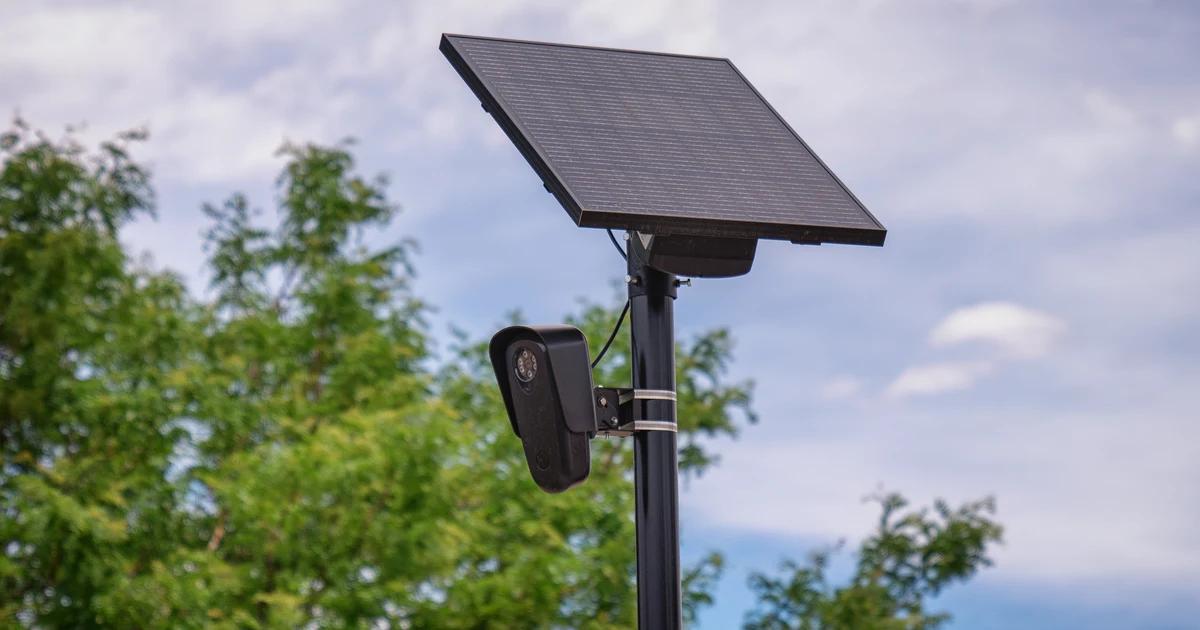
If you drive in Fairfax, this one is about you. The county runs 84 Flock cameras right now, and the pictures they take of passing plates can be kept for up to 21 days.
That is your car and your street. The question is whether our county keeps a tool police credit with helping recover 573 stolen vehicles.
How did we get here? On Sept. 15, Board Chairman Jeff McKay (D) brought a board matter that cited “hundreds of emails from residents.”
It froze any new stationary Flock cameras until the Oct. 20 meeting, told police to look at other options, and sent Flock a letter.
The letter said Flock should “demonstrate—not merely assert—” that county data is safe. The pause covered new installs only. The existing 84 stayed on.
We said at the time that a freeze on installations nobody planned “looks less like policy than like a way to show a flood of emails that the board heard them.”
We asked the Board to “judge the program on facts, not on volume of email.”
The pressure has not come only from the inbox. On Sept. 24 the School Board banned plate readers on school property, citing “significant civil liberties and privacy concerns.”
Last month Arlington ended its relationship with Flock after a closed-door session that did not include public input.
On Tuesday, the facts arrived. Here is what they were.
Fairfax police run 84 Flock cameras and 714 Axon readers on police vehicles, and can reach at least 120 privately owned Flock cameras run by HOAs and businesses.
Since November 2022, the system has helped retrieve 573 stolen vehicles and 67 guns, locate 60 missing people, and contributed to 161 narcotics cases. Police also count 938 arrests with a total of 2,672 charges, most of them felonies.
The highest concentration of cameras sits at the Tysons, Springfield and Fair Oaks malls. “We’ve seen a significant reduction in crime around those locations,” Police Chief Kevin Davis said.
Maj. Hudson Bull runs the Real Time Crime Center. He called it “an essential law enforcement tool” and said, “We justify every single camera placement we have.”
Police also showed the guardrails. They cut the number of people who can search plate data from 821 to 296.
Data was once kept for a year, then 30 days, and a 2025 state law now sets a limit of 21 days.
Nothing goes to out-of-state or federal agencies without a judicial warrant. Every search gets human and AI audits.
Franconia District Supervisor Rodney Lusk (D), who chairs the committee, asked why the county keeps data for 21 days when Flock’s default is seven.
Bull’s answer: “It takes time to gather information that led us to a certain vehicle. After 21 days, it’s gone.”
Police offered three paths. Keep the current program while looking at other vendors and data-sharing practices. Keep it while testing vendors that follow state law and police policy.
Police warned the closed-network path would limit their ability to solve crimes across jurisdictions. Bull said the state’s sharing rule already “makes it very restrictive because we often see crimes connected to D.C. and Maryland.”
Mason District Supervisor Andres Jimenez (D) offered a fourth: “how about no ALPR system at all.”
Tom Arnold, the deputy county executive for safety and security, predicted that route would lead to an increase in crime, but said if supervisors wanted to consider it, that was up to them.
Flock answered too. Its founder and CEO, Garrett Langley, sent the Board an 18-page letter describing the company’s privacy practices, writing, “I take nothing more seriously than building our technology to enhance public safety while enabling accountability and transparency.”
He said Flock “applied a statewide search filter that blocks searches that indicate they may be related to immigration enforcement.” The cameras take still images, record no live video, and use no facial recognition.
No vote was taken, so this is not a tally. It is what the supervisors said on the record. Nine of the ten are Democrats; one is a Republican.
Board Chairman Jeff McKay (D): The next step is for supervisors to send questions to county staff, who will answer all board members so “everyone’s getting the same information at the same time.”
Franconia District Supervisor Rodney Lusk (D), committee chair: “There are questions that still need answers.”
Hunter Mill District Supervisor Walter Alcorn (D): Would end the contract if the vote were today. “We have to make sure that we’re not enabling a surveillance state.”
Mason District Supervisor Andres Jimenez (D): “how about no ALPR system at all.”
Dranesville District Supervisor James “Jimmy” Bierman (D): “It concerns me when we’re working with a vendor that only cares when it hits their bottom line.”
Providence District Supervisor Dalia Palchik (D): “There’s still so much information that’s missing. There’s still things that haven’t been answered.”
Braddock District Supervisor Rachna Sizemore Heizer (D): “No one is doubting the technology can help solve crimes. We need to find the right balance.” And later: “I don’t know the right balance.”
Sully District Supervisor Kathy Smith (D), vice chair: As with the body-worn camera program, “we’re going to work to make it right.”
Mount Vernon District Supervisor Dan Storck (D): We found no quote from him in the reports linked here.
Springfield District Supervisor Pat Herrity (R): “These things are incredibly effective.” “I don’t want to be doing what all these other jurisdictions are doing and pulling out of something that keeps our community safe.”
Put the numbers beside the mood and the gap is plain. Herrity said it the way we would: “We’ve got to think long and hard before we make changes.”
The questions go to staff first. Then any decision on Flock needs the full Board. None of the reports linked here gives a date for that vote.
Flock says every search will need a case code starting Jan. 1, 2027.
Some state lawmakers on both sides of the aisle have said they want to ban Flock cameras throughout Virginia, an issue they will likely take up in 2027.
This Board’s term runs from 2024 through 2027, so every seat is on the ballot in November 2027. Remember what each of them said in that room.
Flock is not on this year’s ballot. Showing up is. Early voting ends Saturday, Oct. 31. Election Day is Tuesday, Nov. 3.
The people who got the pause were the ones who wrote. The people who decide what comes next are the ones who vote.