
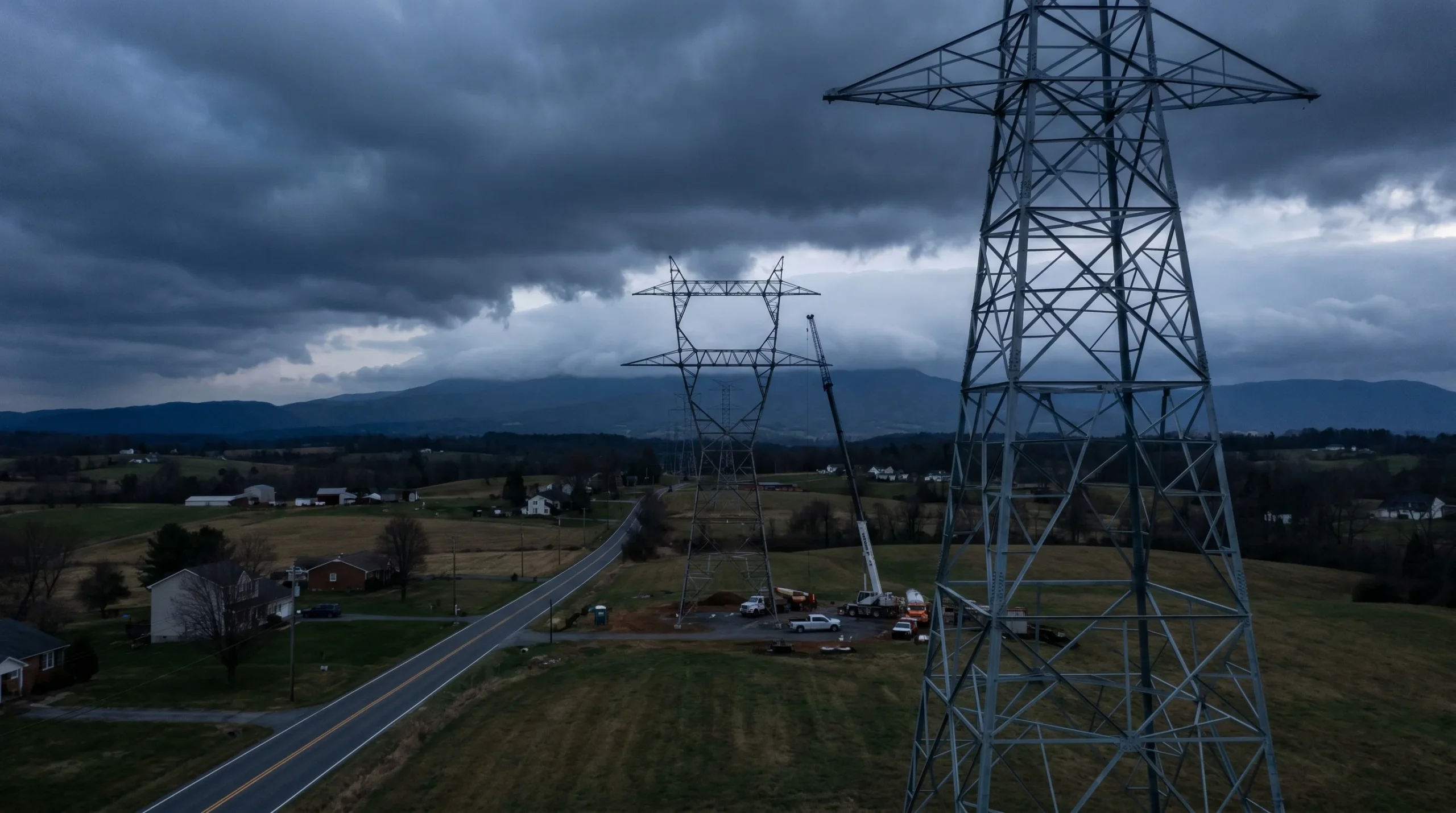
An NRDC analysis of PJM Interconnection grid data found 103 Virginia power plants — enough to power more than a million homes — have been withdrawn or significantly delayed since 2018 because the transmission lines that would connect them never got built. Another 4,000 megawatts will not reach the grid until 2030. The average network-upgrade cost on a withdrawn project ran roughly $10.4 million. Gov. Abigail Spanberger (D) has not called a special session and has not introduced a permitting-reform package. She and seven other governors sent PJM a letter.
The number is 103.
That is how many power plants in Virginia have been withdrawn or significantly delayed since 2018, according to the Natural Resources Defense Council analysis of PJM data published this month and covered by VPM News and the WHRO regional reporting desk. Most of them were clean-energy projects. Together they would have produced about 5,000 megawatts. Another 4,000 megawatts of plants are sitting in line, delayed until 2030.
The structural cause is not in dispute. “We desperately need new power plants to be able to supply power to the grid,” Claire Lang-Ree, the NRDC sustainable-energy advocate who authored the analysis, told WHRO reporter Katherine Hafner. “Without these new power plants, consumers are paying high prices for energy because we’re seeing demand outstrip supply.”
The reason new plants do not connect, in Lang-Ree’s words: “It would be like if we had a brand new high-speed train that’s constructed and ready to go, and then we find out that the rails underneath can’t support it because they’re cracked and outdated.”
So Virginia ratepayers cover the gap. The Commonwealth’s offshore wind farm — Dominion Energy’s flagship project, the most expensive in Dominion’s history — is expected to be prevented from delivering its full capacity for several more years.
In Richmond, no one is doing anything about it. The Senate Democrat majority led by Sen. Scott Surovell (D-SD-34, Mount Vernon) and the House Democrat majority led by Speaker Don Scott (D) have not passed transmission-permitting reform. Gov. Abigail Spanberger (D) has not called a special session, has not proposed a permitting-reform package, and has not asked the State Corporation Commission to fast-track substation approvals.
What Spanberger has done is sign a letter. She and seven other governors recently started pushing PJM to spread data-center costs more equitably across customer classes.
Pushing is not building.
Asking PJM to redistribute costs is a fight over who pays for the bottleneck. It is not a plan to break it. The transmission lines do not get built faster. The 103 withdrawn projects do not come back. The 4,000 megawatts stuck until 2030 do not come online sooner.
Data centers are arriving in Loudoun and Prince William and the Route 28 corridor whether the grid is ready or not. Northern Virginia has more data-center load growth than any other region in the United States. Higher demand. Static supply. A grid built for a smaller economy.
Lang-Ree, friendly to clean-energy goals and not a Republican voice, used the word for what is happening: “perplexing.” It is not. It is what one-party Richmond produces when sending a letter is cheaper than pouring concrete.
All 100 House of Delegates seats are on the November 2027 ballot. All 40 Virginia Senate seats are on the November 2027 ballot. Surovell’s SD-34 is one of them. Eighteen months. Mark that date down.
The Fairfax County Republican Committee runs on volunteers — neighbors who knock doors, neighbors who staff phone banks, neighbors who show up to public hearings. No one can do everything; everyone can do something. Volunteer with the Fairfax GOP.
And bring the resources. The November 3, 2026 federal midterm is six months away. Out-of-state Democrat PAC money is already flowing into Virginia. Local money is what answers it — voter contact, mailers, ad reach, every door inside Fairfax County between August and Election Day. Donate to the Fairfax County Republican Committee. Match yours with a neighbor’s. Forward this to the homeowner whose electric bill keeps creeping up.