
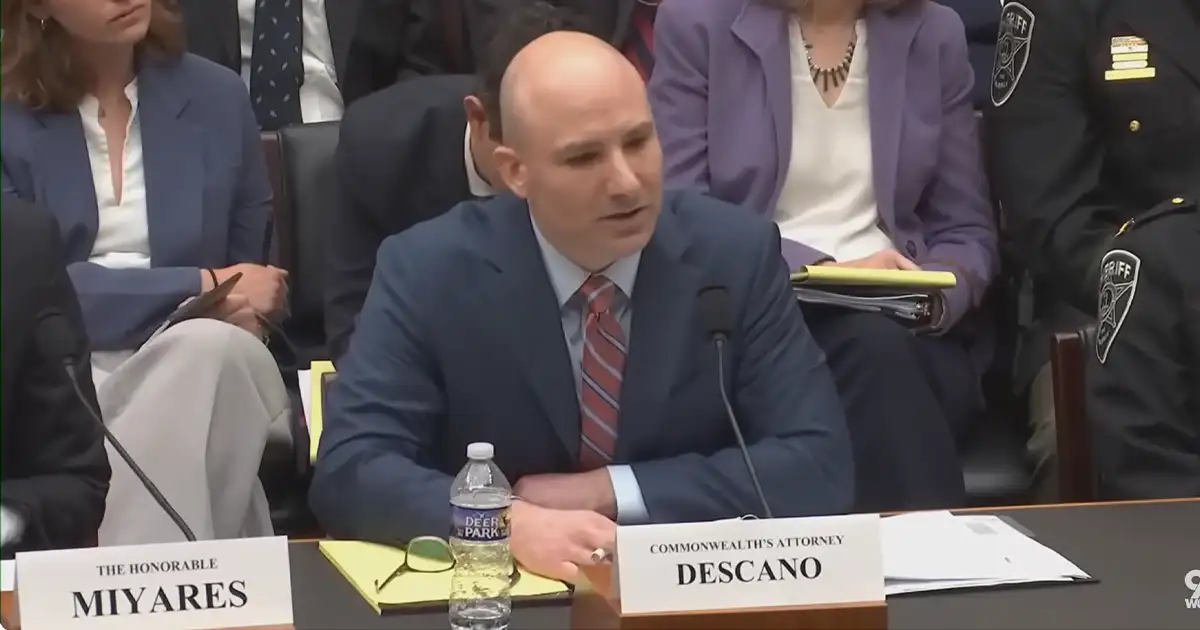
Steve Descano, the Commonwealth’s Attorney who serves as Fairfax County’s top prosecutor, told Congress he didn’t have the documents to answer basic questions about how his own charging-and-plea policy works.
The U.S. House Judiciary Committee called the bluff. The Republican-led committee gave Descano until June 18 to produce every case his office has declined to prosecute since January 1, 2020 — with the nationality of every defendant attached.
The demand is specific. The committee named 27 individual defendants and wants case-by-case documentation on each — plus the answer Descano dodged under oath: which categories of illegal-alien defendants his policy actually covers.
The committee’s word for what it wants is nolle prosequi — the legal term for charges a prosecutor drops. Descano’s office has been filing them away since January 1, 2020. Now Congress wants every one of them on the table.
The names are why the letter exists. Among the 27: Marvin Morales-Ortez, an alleged MS-13 member whose charges were dismissed — before he was later accused of murder. A defendant charged with child sex crimes. A registered sex offender.
Read that sequence again. The charges were dropped first. The murder allegation came after.
Every dropped case on that list was a charging decision made in your county. Some of those defendants are back on Fairfax streets. The committee wants to know how many — and on whose authority Descano let them go.
This isn’t the only one. The U.S. Department of Justice has a separate civil-rights investigation open into whether Descano gave illegal-alien defendants preferential treatment over American citizens — running on its own timeline, parallel to the House demand.
Under oath, Descano said he couldn’t explain how the policy operates because he didn’t have the records on hand. The committee’s response was to set a deadline and demand them — every dropped case, every nationality, every one of the 27 names.
Descano’s answer to the demand was to call it harassment — Congress, he complained, has nothing better to do than bother the country’s “safest large jurisdiction.”
Translation: the records are none of your business. The 27 names say otherwise.
Descano testified he lacked the documentation. He has not produced it. He has not changed the policy. The deadline is June 18.
June 18 is the deadline. Descano can produce the files or refuse them — there is no third option. And in November 2027, the voters of Fairfax County get the last word on the prosecutor who told Congress he had none.