
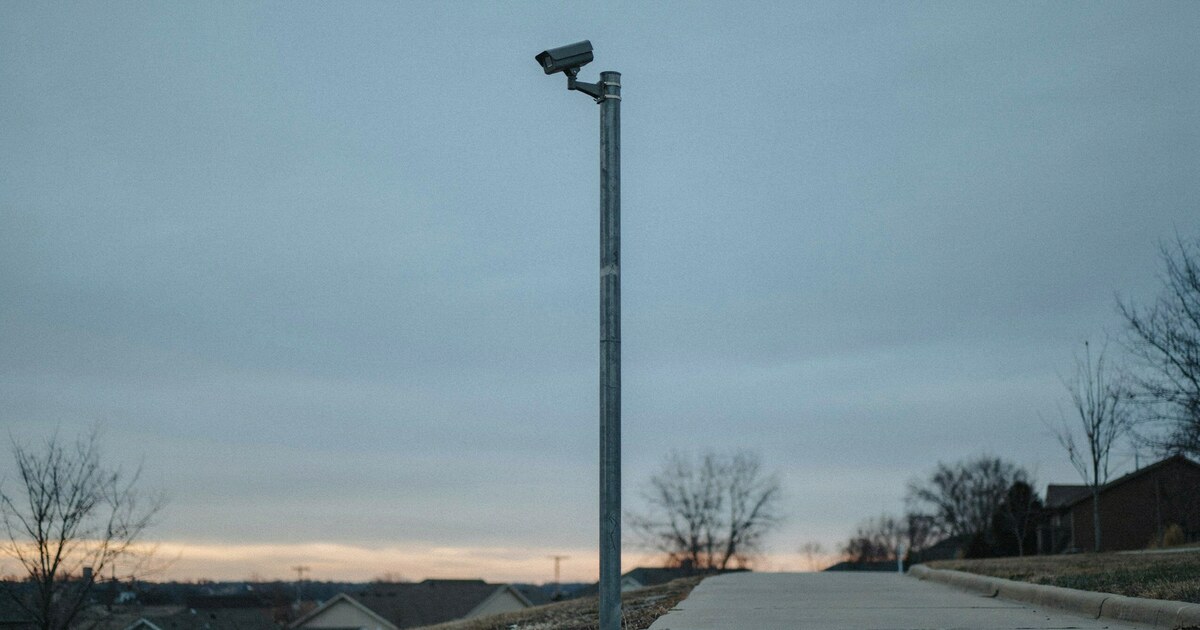
Fifty. That is roughly how many Fairfax County police officers will be allowed to search license-plate camera data under the Board’s new directive, out of nearly 1,500 sworn officers. Before the vote, there were 296 users.
On November 17, on a 6-4 vote, the Board of Supervisors passed Chairman Jeff McKay’s plan. It cuts data retention from 21 days to seven, limits searches to officers in the Real Time Crime Center, keeps the freeze on new cameras and directs the county to “transition away from Flock Safety technology.”
Here is the part that should stop residents cold: the Chairman concedes there has been no misuse. When the Board paused new cameras in September, McKay said there had been “no identified instances of misuse by FCPD.” At last week’s vote, he again acknowledged police have not been accused of misusing the system. The Board is fixing a problem it admits it cannot find.
To be fair, license plate readers are genuinely controversial, and the concerns are not imaginary. The cameras log the time, date and location of every passing car, not just suspects. Civil libertarians on the left and the right worry about a database that can trace where law-abiding people drive. Nationally, there have been reports of officers using plate data to track former partners. Residents organized as DeFlock Fairfax sent supervisors hundreds of emails. Arlington voted to remove its 41 Flock cameras, and Alexandria is deactivating its own. People who want firm limits on government surveillance hold a principled position, and it deserves a serious answer.
But a serious answer weighs the costs on both sides. Fairfax police say the readers have helped in more than 800 cases since 2022, from stolen cars and carjackings to missing elderly residents, malicious woundings and attempted rapes. Two weeks before the vote, gunfire erupted on Janna Lee Avenue in Hybla Valley, leaving 24 shell casings in the street. Plate readers led detectives to one vehicle within 90 minutes. Five people were charged and seven guns recovered. Major Hudson Bull said the case could have been solved without the cameras, but it would have taken much longer and risked lost evidence.
Now consider what the new rules do to cases like those. A seven-day window means a lead that surfaces on day eight is gone. A pool of 50 searchers in one unit means a patrol officer chasing a stolen car at 2 a.m., or a detective working a burglary series, waits in line. Retention and access limits can be reasonable safeguards. Cutting both this deeply, at once, with no documented abuse, trades real public safety for a hypothetical risk.
County staff report back at a special meeting of the Board’s Safety and Security Committee on Tuesday, Dec. 15, at 1:30 p.m. Before then, email the committee’s chair, Franconia District Supervisor Rodney Lusk, at Franconia@fairfaxcounty.gov. Ask him three things: which vendor replaces Flock, on what date, and how many officers will be able to search it.